
Elation vs Hint for Direct Primary Care
Elation is the stronger choice when the chart is the center of your day, and Hint is the stronger choice when memberships, family plans and employer contracts are the center of your business. Elation now bills memberships inside the EMR and Hint now sells its own EMR, so either one can run a DPC practice alone, but each is still clearly better at the thing it started with. Plenty of clinics skip the choice and run both, because the two systems sync patient details and membership status.
Every price below is the vendor's published price, checked on each vendor's site in November 2026. Confirm the numbers on your demo, because pricing pages change.
The verdict at a glance
If you only have a minute, this table is the decision. The rest of the page explains the reasoning and the fine print behind each row.
| Choose Elation if... | Choose Hint if... |
|---|---|
| You want a mature primary care chart above all | Memberships are the heart of the business |
| You'll hire office staff (they're included) | You sell to employers or plan to soon |
| You want built-in memberships with simple pricing | You need quarterly, annual or contract-length plans |
| You want controlled-substance eRx in the base price | You'd like to pay nothing until you launch |
| You'll add a non-prescribing clinician ($215/mo) | You want unlimited members on one flat price (Launch) |
Bring the same visit and the same member to both demos. Ask Elation to chart a sick visit and send a refill, then ask Hint to process a failed card and change a family's plan. The tool that handles your hardest everyday moment calmly is usually the right one.
Published prices side by side
Here's what each vendor publishes for a single DPC doctor, plus the add-ons that most often change the bill.
| Elation | Hint | |
|---|---|---|
| Base plan | $375/mo per DPC provider | $290/mo Launch, 1 clinician, unlimited members |
| Next tier | $425/mo Standard Provider | $320/mo Pro, 1 clinician, 100 members |
| Extra clinician | Same per-provider price | $290/mo on Launch, $232/mo on Pro or Scale |
| Office staff | Included | Ask on the demo |
| Extra members | Priced per provider, not per member | Pro adds $36/mo per 50 members |
| Card processing | 2.99% (via Stripe) | 3% + $0.30 on Launch, 2.75% + $0.30 on Pro |
| ACH | 1% + $0.25, $5 cap | 1% + $0.25 on Launch, $5 cap |
| Telehealth | $25/mo per provider | Ask on the demo |
| API | Developer Platform Core, $150/mo per provider | $100/mo add-on |
| Getting started | Ask on the demo | Pay nothing until launch |
A few things jump out. Elation's price stays the same whether you have 80 members or 600, because it's priced per provider. Hint's Launch plan does the same at $290 with unlimited members, while Pro and Scale charge for member blocks but add employer billing, lower card rates and more. On Pro, a doctor with 300 members would pay $320 plus four blocks of 50 at $36, which comes to $464 a month before processing. If you outgrow Pro, Scale is $770 a month with 500 members and needs a one-time $500 paid onboarding.
Card processing matters more than most people expect. On a $90 monthly membership, Elation's 2.99% is about $2.69 per charge and Hint Launch's 3% plus $0.30 is about $3.00. Across 300 members that gap is around $93 a month, so it's worth adding to your comparison. Hint also lists a 1% surcharge on American Express on top of the card rate. For a fuller cost model, see DPC EMR pricing compared.
Charting and clinical work
Elation was built as a primary care chart first, and it shows in the breadth of what's on its published product guide. ePrescribing for both controlled and non-controlled substances is included, a patient portal gives members secure access to messages and reports, and there's ambient scribing and note automation inside the encounter. Its included documentation tools read scanned intake forms into discrete chart fields and summarize a patient's history from the chart. A deeper documentation package is a paid add-on at $199 a month per provider, so ask which tools you get in the base plan before you compare totals.
Hint's EMR covers the core DPC needs on the same record as the membership. ePrescribing and lab ordering come with the EMR, along with medication inventory and dispensing, which matters if you sell generics in house. Hint's clinical copilot for documentation and messages is included on Pro and Scale and costs $100 a month on Launch.
The honest summary is that Elation has the longer track record as a chart, and Hint has the advantage of not needing a second system for billing. If you're a doctor who notices every extra click, sit through a full visit in each before you decide. Our demo checklist has the questions to bring.
Memberships and employer contracts
This is where the two differ most. Elation's Membership Management lets you create and manage recurring membership plans directly in the EMR, which is plenty for a practice with a few simple tiers (adult, child, family). It needs a Stripe account, and the fees are the 2.99% card and 1% plus $0.25 ACH rates above.
Hint was built for exactly this work, and its billing options go further. You can set a monthly or annual default billing period, offer quarterly, semi-annual or annual payment with a discount, set a contract length that renews or ends automatically, and define a minimum enrollment period so you're warned before canceling a member inside it. If you bill in arrears, only a monthly period is supported.
Employer contracts are the deciding factor for many clinics. On Pro and Scale, Hint includes employer-sponsored memberships with employer enrollment, eligibility autosync and consolidated billing. Pro includes one eligibility autosync feed and Scale includes three, with more at $75 a month per feed. The Launch plan doesn't include employer billing at all, so a clinic that signs its first employer may need to move up a tier. We couldn't find employer billing in Elation's published product guide, so if employers are part of your plan, ask on the demo how they'd handle an eligibility file and a single monthly invoice.
Using Elation and Hint together
Running both is a real, common setup, not a workaround. Hint's Elation sync keeps patient records up to date in both systems when contact or demographic information changes in either one. It also passes each member's membership status and membership plan name into Elation, so the doctor can see in the chart whether someone is active and which plan they're on.
That covers the most painful double entry, but it isn't everything. The sync, as Hint describes it, is about demographics and membership tags. Payment problems, visit notes, tasks and messages still live in their own system, so someone on your team still has to notice a failed card in Hint and follow up, or see a chart task in Elation. That's the gap where small leaks happen, and it's the tools' fault for never being designed as one system, not your staff's. Some clinics close it with a dedicated tech team that connects the tools a clinic already uses, like Tabflows. Others assign one person to check both every morning.
If you go this route, budget for both bills. One doctor on Elation's Standard DPC plan plus Hint's billing-only Core Growth plan ($110 a month with 100 members, plus $45 per 50 more) works out to $485 a month at 100 members before processing. Card fees then follow Hint's rate (2.75% plus $0.30 on Core Growth), since Hint is collecting the payments.
Who each one is best for
Elation is best for doctors who want a polished, established primary care chart, clinics with several staff members (staff seats are included) and practices that plan to add a non-prescribing clinician, who is published at $215 a month. Its built-in memberships are a good fit when your tiers are simple and you don't sell to employers.
Hint is best for clinics where the membership is the product, and especially those signing employer contracts. It's also a strong fit for a new practice watching cash, since you pay nothing until you launch and the Launch plan doesn't charge per member. Practices that dispense medications get inventory and dispensing on the same record.
Both together is best for practices that love Elation's chart but need Hint's billing depth, and are willing to pay two subscriptions for it.
Our take
If you can only pick one, pick the system that's strongest at the work you do most. A doctor who spends the day charting and has a simple fee schedule will be happier in Elation. An owner who spends the week on renewals, family plans and employer invoices will be happier in Hint. And if both describe you, the Elation and Hint pairing is well worn, with a sync that keeps the basics in line. To see how either compares with another option, read Atlas.md vs Hint and Akute vs Elation, or start from our best DPC EMR roundup.
The part most guides skip
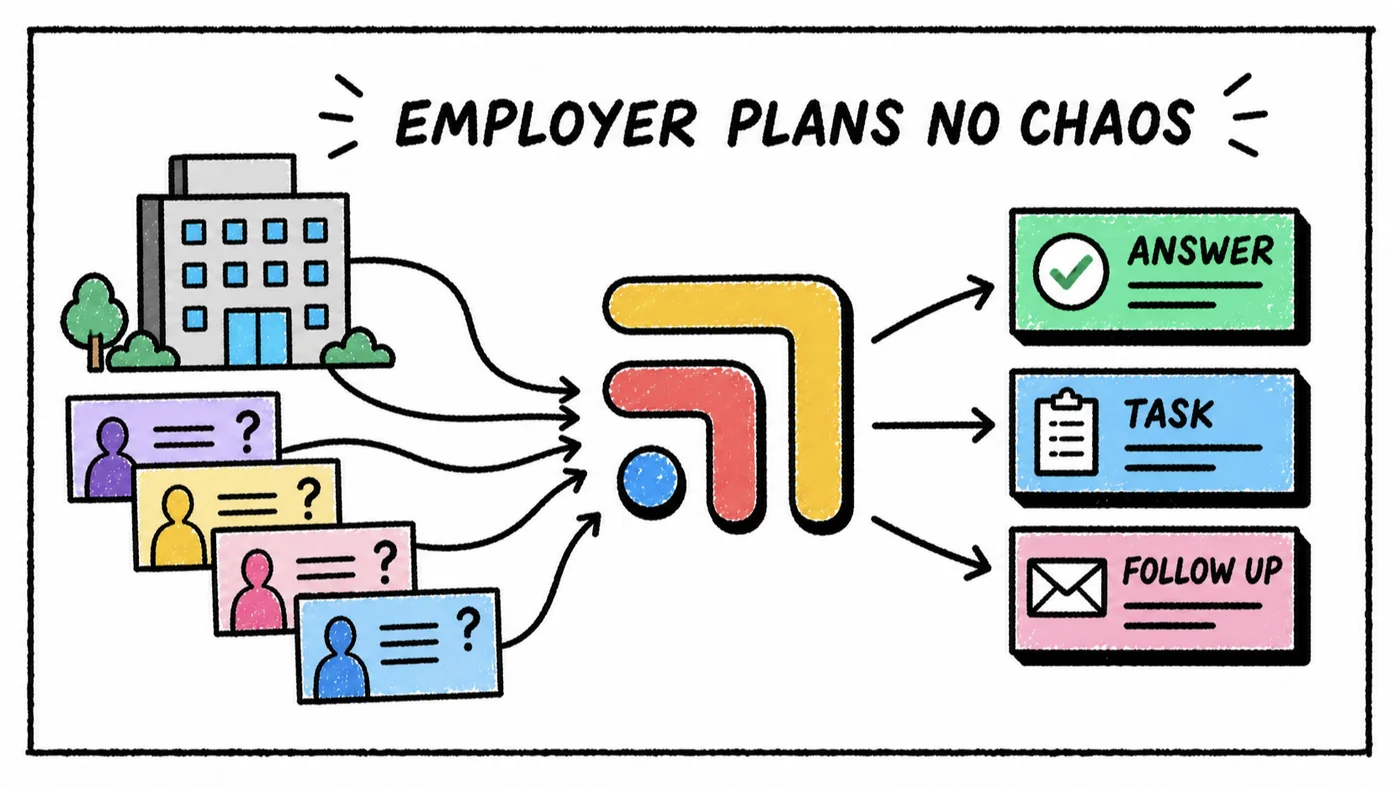
Every tool in a DPC clinic is good at its own job, and none of them were built to talk to each other. A patient text turns into a refill in the chart, which needs a review, which needs a reply, and the follow-up lives in someone's head. That isn't anyone's fault. The tools just don't share a to-do list.
That's the job Tabflows does. Tabflows is a dedicated tech team for DPC clinics. We connect the tools you already chose and give your team one place for chat, tasks and patient context, with managed workflows for the repeat work like refills, lab follow-ups and onboarding. You keep every tool you picked.
Frequently asked questions
Is Elation or Hint better for direct primary care?
Elation is the better pick if the chart is what you care about most, and Hint is the better pick if memberships, family plans and employer contracts drive your practice. Many clinics end up using both, with Elation as the chart and Hint as the billing system.
Do Elation and Hint integrate?
Yes. Hint's Elation sync keeps contact and demographic information up to date in both systems, and it passes each member's membership status and membership plan name over to Elation.
How much do Elation and Hint cost for one DPC doctor?
Elation's published Standard DPC price is $375 a month per provider. Hint's Launch plan is $290 a month with one clinician and unlimited members, and Pro is $320 a month with one clinician and 100 members. Card processing is extra on both.
Can I use Elation's built-in memberships instead of Hint?
Yes. Elation's Membership Management lets you run recurring membership plans inside the EMR. It needs a Stripe account and charges 2.99% of collected card payments, or 1% plus $0.25 per ACH payment, capped at $5.
Does Hint handle employer DPC contracts?
Hint's Pro and Scale plans include employer-sponsored memberships with employer enrollment, eligibility autosync and consolidated billing. The Launch plan does not include them.